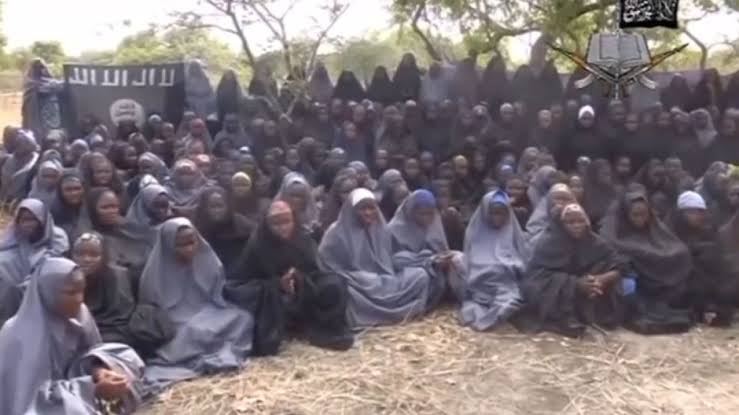
On the night of 14–15 April 2014, 276 mostly Christian, with some Muslim, schoolgirls aged from 16 to 18 were kidnapped by the Islamist militant group Boko Haram from the Government Girls Secondary School in the town of Chibok in Borno State, Nigeria.
A decade after the horrific 2014 abduction of schoolgirls in Chibok, Nigeria, the United Nations Committee on the Elimination of Discrimination against Women (CEDAW) has disclosed that 91 of the victims remain unaccounted for or held captive by Boko Haram terrorists, underscoring ongoing rights abuses.
The committee’s investigation also highlights the persistent trauma and societal rejection faced by survivors, who often lack essential psychological and social services.
These revelations stem from a detailed inquiry report issued after a confidential two-week fact-finding trip to Nigeria in December 2023.
The CEDAW team evaluated conditions in Abuja and key states such as Adamawa, Borno, Enugu, and Kaduna.
“The committee finds grave and systematic violations persist after Chibok mass abduction of schoolgirls,” the report stated.
“Nigeria is responsible for grave and systematic violations of women’s and girls’ rights amid multiple mass abductions.”
The experts called for immediate steps to halt torture and mistreatment.
School officials noted that this marked the first UN visit to Chibok Government Secondary School since the 2014 incident.
In the capital, the delegation engaged with the Director of the Women Development Department and the Director of Defence and Security.
They also consulted representatives from the National Agency for the Prohibition of Trafficking in Persons, the Nigerian Armed Forces, and the Police Service Commission.
At an internally displaced persons (IDP) camp in Abuja, the group spoke with Boko Haram abduction victims and women and girls seized by other factions for ransom.
“The initial focus of the Committee’s inquiry was on the mass abduction carried out by Boko Haram in 2014, when 276 schoolgirls were taken from Chibok Secondary School in Borno State.
“Of that number, 82 managed to escape on their own, while 103 were released in small groups between 2016 and 2017 through prisoner exchanges.
“At least 91 of the Chibok girls remain in captivity, or their whereabouts are still unknown.”
The probe went further, addressing kidnappings by various armed factions in the years since, including those driven by extortion.
Nahla Haidar, the Committee’s Chair, emphasized: “The abduction of the Chibok girls was not an isolated tragedy but part of a series of mass abductions targeting schools and communities across northern Nigeria.
“Though it was the first publicised case to gain global support.
“While such attacks had started earlier, Chibok marked the beginning of increased international attention of a decade-long pattern of mass abduction.”
She continued: “At least 1,400 students have been kidnapped from schools since the Chibok abduction.
“These girls were often taken for ransom, forced marriage, trafficking and prisoner exchange,
“The Committee considered that the state party’s repeated failure to protect schoolgirls and other women and girls from abductions amounts to systematic and grave violations.”
The document detailed brutal captivity conditions under Boko Haram and rival groups, including malnutrition, beatings for non-compliance, forced marriages to militants, religious conversions, and births in confinement.
“Other survivors of abductions for ransom by other armed groups faced extremely high risks of sexual violence, often suffering repeated rape by different men, and other physical violence,” the report concluded.
Post-release experiences for the Chibok survivors differed sharply.
Those who fled independently were shunned in their communities due to stigma linked to associations with insurgents, preventing returns to home villages.
Many reportedly received no rehabilitation, therapy, or educational opportunities.
“In contrast, the 103 girls freed through government negotiations received training and psychosocial care in Abuja, with many benefiting from scholarships at the American University of Nigeria and abroad,” CEDAW observed.
“Meanwhile, the fate of the 91 remaining Chibok girls remains unknown, as the government was no longer pursuing negotiations with the armed fighters.”
“The testimonies of survivors highlight not only the suffering endured during captivity, but also the profound challenges faced upon their return.
“These girls were failed twice, first when they were abducted, and again when so many of them were left abandoned without care or support after escaping, including those left in IDPs’ camps.
“In addition, many families were left destitute having used all their assets to pay the ransom to the kidnappers,” Haidar remarked.
The panel determined that Nigerian officials had neglected to safeguard schools and communities from assaults, ensure girls’ educational access, and shield them from kidnappings.
It further criticized the lack of efforts to reduce stigma against survivors, particularly rape victims and their offspring.
Authorities were faulted for not enacting laws against abduction and marital rape nationwide across all 36 states.
The Committee recommended that Nigeria intensify efforts to free the 91 Chibok girls and other captives held by Boko Haram and similar groups.
It further pressed for bolstering police funding and resources to shield women and girls from large-scale kidnappings.
The complete report, including its conclusions and proposed actions, is now accessible online.
The visiting team included two Committee members—Dalia Leinarte from Lithuania and Rhoda Reddock from Trinidad and Tobago—supported by two Human Rights Officers. (NAN)