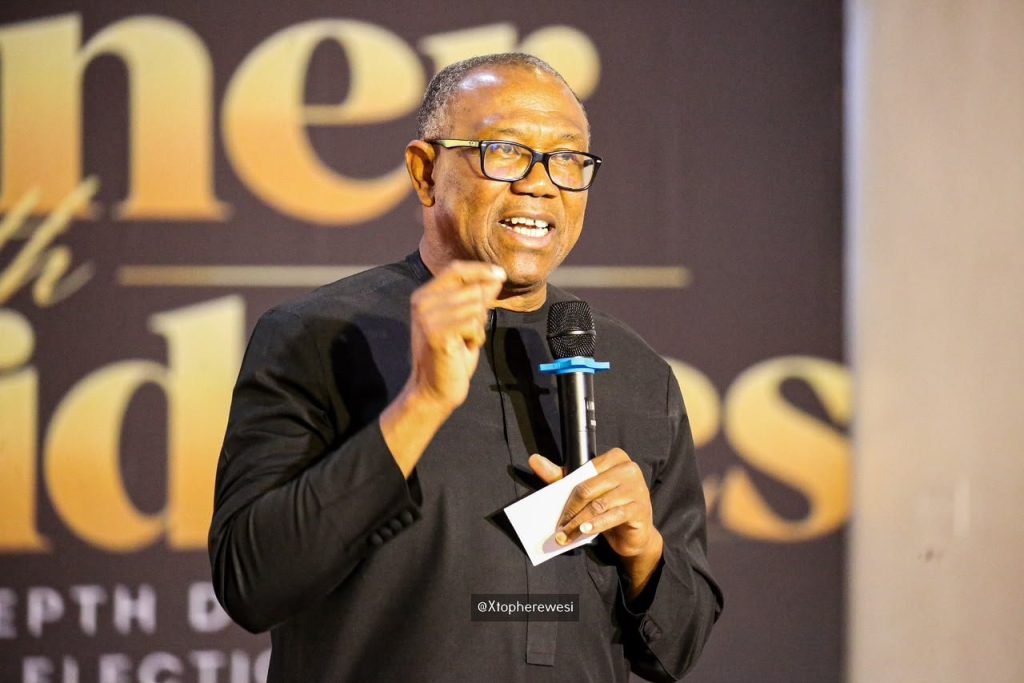
NDC Presidential candidate, Peter Obi
Nigeria Democratic Congress (NDC) presidential candidate, Peter Obi, has criticised the Federal Government over what he described as the failure of recent economic reforms to improve the living conditions of Nigerians despite reports of better macroeconomic performance.
Reacting to the latest World Bank report, Obi said improvements in government revenue, economic growth and foreign reserves should not be mistaken for an improvement in the welfare of ordinary Nigerians.
According to him, the real test of economic development is whether poverty is reducing, more jobs are being created and inequality is declining across the country.
Obi said, “The recent World Bank report which noted improvements in few macroeconomic indicators such as economic growth and revenue generation should not be misinterpreted and mispresented by the incompetent President Bola Tinubu led APC Government as evidence that the standard of living of Nigerians is improving.”
He added, “An economy is not truly stabilized simply because government revenue increases, foreign reserves strengthen, or GDP grows. Stability exists when citizens can afford food, obtain healthcare, provide education for their children, and live with dignity.”
Questioning the impact of the reforms on citizens, Obi asked, “What comfort does higher revenue offer a mother who cannot provide her children with a nutritious meal? What does higher government revenue mean to a family forced to choose between purchasing food and paying for medicine? What benefit do celebrated reforms provide when ordinary Nigerians continue to bear intolerable costs and hardship?”
The former Anambra State governor also referred to the World Bank report titled, “Beyond the Federal Purse: How Higher Revenues Reshaped State Priorities,” which stated that the Federal Government spent N7.7 trillion on debt interest payments between January and June 2026, compared with total revenue of N6.2 trillion during the same period.
Obi argued that the figures showed a growing debt burden, adding that despite higher borrowing and revenue, spending on capital projects had dropped significantly, which he blamed on what he described as reckless borrowing, corruption and poor governance.
He further stated, “President Bola Tinubu and his incompetent team must recognize that intentionally presenting and projecting incomplete economic statistics cannot replace the critical measure of how reform impacts on the welfare of the people. A government cannot expect citizens to applaud statistics while they struggle to survive the effects of its policies.”
Obi also cited reports showing that about 140 million Nigerians are living in multidimensional poverty, saying recent findings by the United Nations Development Programme indicated that poverty reduction gains in Nigeria had been reversed.
The World Bank recently reported improvements in some of Nigeria’s macroeconomic indicators, including higher revenue generation and economic growth, but also highlighted the country’s rising debt servicing costs and fiscal challenges.