Nigeria Democratic Congress (NDC) presidential candidate, Peter Obi, has called for urgent action to address Nigeria’s education challenges, warning that the future of the country depends on prioritising schools, healthcare and poverty reduction.
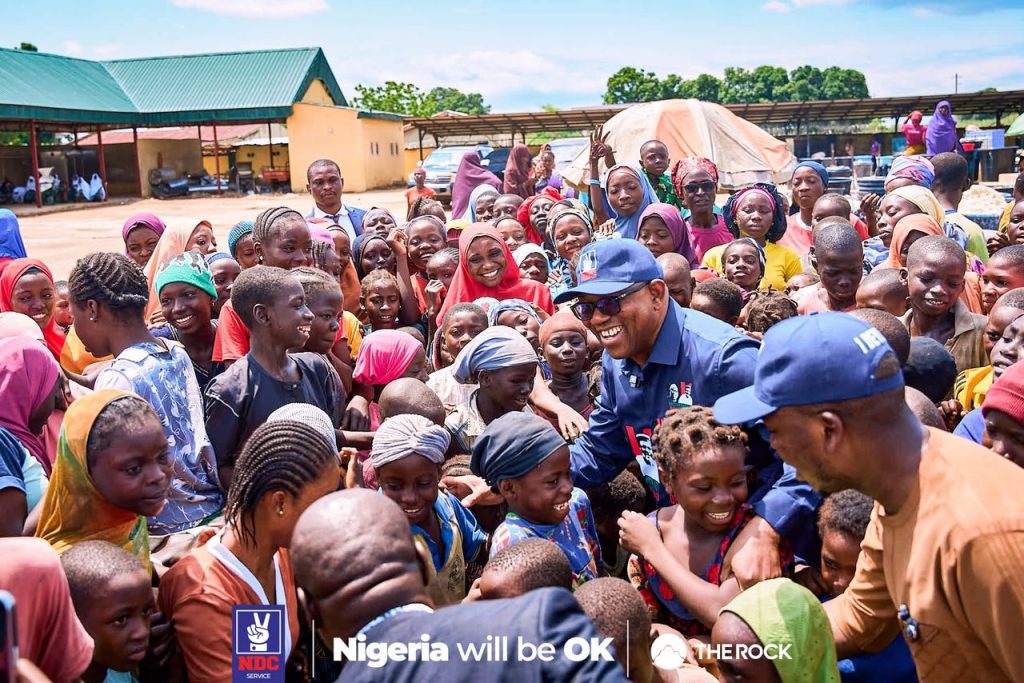
Obi raised the concern on Friday after visiting Sheda and Sheda Galadima communities in Kwali Area Council of the Federal Capital Territory (FCT), where he said he found many school-age children outside the classroom during school hours.
According to him, discussions with some of the children revealed that they had stayed at home for more than two weeks because of an ongoing teachers’ strike.
Expressing concern over the situation, Obi said the development was disturbing, especially in a country already battling a large number of out-of-school children.
“So, while we are busy inaugurating campaign councils with pomp and pageantry and declaring economic miracles, our young children of school age are loitering in the streets because of a strike, in a nation with already over 18 million out-of-school children,” he said.
The former presidential candidate said education remains a major foundation for national development, stressing that countries that have made progress globally invested heavily in education, healthcare and reducing poverty.
“Education remains the most important tool for development and nation-building. It has been proven that the more educated a nation is, the better it develops,” Obi stated.
He argued that Nigeria’s rising poverty level is linked to inadequate investment in key sectors, particularly education, adding that government decisions must place children and their future at the centre of policies.
“It is time to put our children and the future of our country back at the centre of governance and government decisions,” he said.
Obi urged relevant authorities to immediately resolve the issues surrounding the teachers’ strike and ensure that public school pupils in the FCT return to classrooms.
He also reiterated his commitment to prioritising education, healthcare and poverty reduction, saying these areas would receive attention under his proposed leadership agenda.
“Under our leadership, investment in health and education, as well as pulling people out of poverty, will be our priorities,” Obi added.
Nigeria has continued to face challenges in the education sector, including school closures, inadequate infrastructure, teacher shortages and a high number of children who are out of school. Stakeholders have repeatedly called for increased funding and stronger policies to improve access to quality education.
Obi concluded his message by expressing optimism about Nigeria’s future, saying: “A New Nigeria is POssible, and Nigeria will be OK.”