
A government that asks its citizens to endure the pain of economic reform must demonstrate a corresponding willingness to examine the cost of governing them. Sacrifice becomes difficult to defend when households are compelled to adjust while the machinery of the state appears exempt from the same discipline.
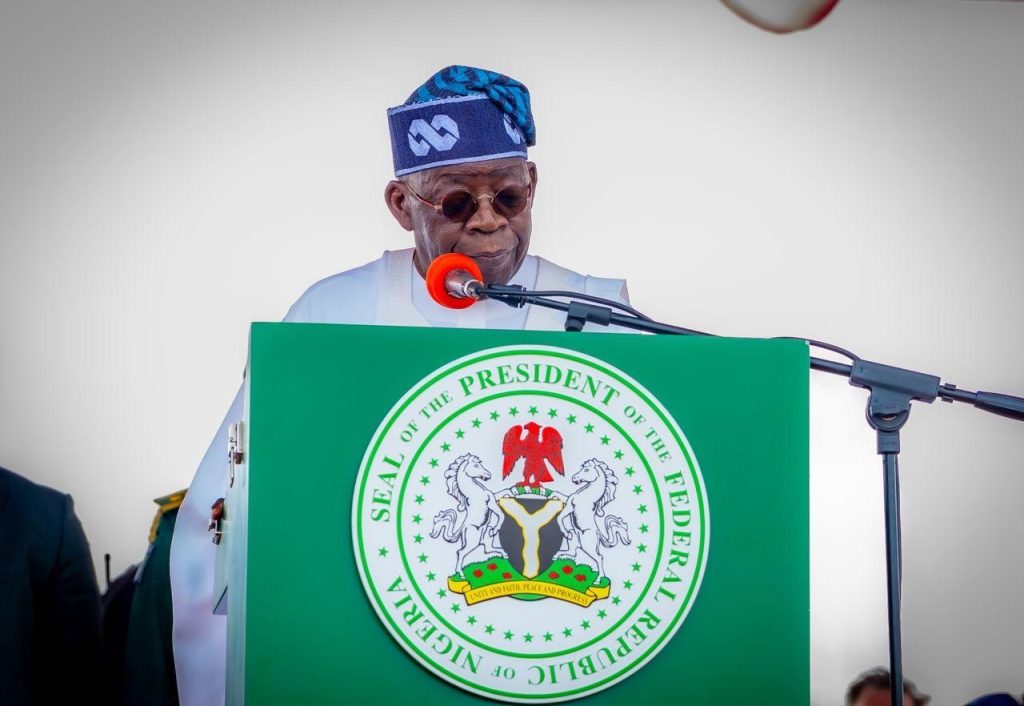
This is the broader question raised by President Bola Tinubu’s recent transmission of three executive bills to the House of Representatives. The proposals concern drug law enforcement, transport safety investigation and the replacement of the Administrative Staff College of Nigeria (ASCON) with a National School of Government. punchng.com
Each addresses an important public responsibility. Nigeria needs effective action against illicit drugs, safer transport systems and public officials capable of translating policy into results. The issue is whether the proposed legal changes offer the clearest, most economical and most accountable means of achieving those objectives.
At a time of considerable hardship, government must explain what every institutional reform will improve, what it will cost and why existing arrangements cannot deliver the same result.
The three proposals should, however, be assessed separately. Consolidating legislation, expanding an agency’s responsibilities and replacing an institution are different exercises. None automatically amounts to creating another bureaucracy. Equally, none deserves approval merely because it carries the promise of reform.
The drug enforcement proposal illustrates the point. Bringing relevant laws into a consolidated framework could improve clarity and enforcement. Its value will depend on the provisions lawmakers eventually approve and the safeguards accompanying the powers they confer. A stronger legal framework must support effective enforcement, due process and an appropriate balance between punishment, prevention and rehabilitation.
My more immediate concerns relate to transport safety investigation and the proposed National School of Government. Both invite a closer examination of institutional boundaries and the use of resources already committed to existing organisations.
On transport safety, an important clarification is necessary. Although reports of the proposed amendment describe an expansion beyond aviation, NSIB’s own published account states that the 2022 legislation already extended its mandate to maritime, rail and other transport modes. The question for lawmakers is therefore precisely what the new amendment adds, changes or clarifies. NSIB
That distinction matters. Legislative scrutiny should begin with a comparison of the existing law and the proposed provisions. Nigerians deserve to know which shortcomings have been identified and how the amendment would remedy them.
There is a reasonable case for a body capable of investigating serious transport accidents across different sectors. Shared technical resources and coordinated investigations could strengthen safety. But a wider mandate must be matched by specialist personnel, equipment, funding and clear operational limits.
An aircraft accident, a railway derailment, a boat mishap and a highway collision present different investigative demands. An institution cannot acquire the necessary expertise simply because an Act assigns it responsibility.
This brings me to the Federal Road Safety Corps (FRSC), established in 1988. Its work in road safety education, enforcement, crash prevention and emergency response gives it an important place in any discussion of road transport investigations. frsc.gov.ng
Where the proposed arrangements affect road crashes, the relationship between NSIB and FRSC must be explicit. Which incidents would require an independent technical investigation? Who would preserve evidence, coordinate access and communicate findings? How would agencies share information without duplicating expenditure?
There is also a distinction between enforcing safety rules and independently investigating why an accident occurred. A technical investigation may need to examine failures involving operators, infrastructure, equipment and the regulatory system itself. Strengthening FRSC remains necessary, but it does not remove the need to consider how independent investigation should work.
My concern, therefore, is that institutional responsibilities should be carefully defined. Cooperation should be designed into the law, rather than left to the goodwill of officials after a tragedy.
The reported proposal to transfer supervisory oversight to the Presidency deserves similar scrutiny. The decisive issue is whether investigators will have the freedom and resources to pursue evidence, publish findings and make recommendations without improper interference. Administrative proximity to the Presidency cannot, by itself, guarantee independence.
The proposed National School of Government raises another question: what is missing from Nigeria’s existing arrangements for developing public-sector leadership?
ASCON already undertakes management training, research and consultancy. Before replacing it, government should explain whether its shortcomings arise from its legal mandate, curriculum, funding, management or the failure to apply what participants learn. ascon.gov.ng
Different problems require different remedies. An outdated curriculum can be revised. Weak management can be addressed. Inadequate facilities can be improved. If the present legal framework prevents necessary changes, that case should be made openly.
A new institution may be justified. But a new name cannot carry the burden of proof.
It is equally important to recognise that the proposal is described as a replacement for ASCON. It would therefore be premature to assume that it necessarily adds another agency to the existing total. The proper questions concern transition costs, staffing, assets, governance and the relationship between the successor institution and other training bodies. punchng.com
Government should set out what would happen to ASCON’s facilities, personnel, obligations and accumulated experience. It should also show what additional public value the new arrangement would deliver.
The Public Service Institute of Nigeria belongs in this discussion. Would closer collaboration, shared programmes or a carefully designed merger produce better results? Has government compared those options with the cost and benefits of replacing ASCON?
The National Institute for Policy and Strategic Studies at Kuru also forms part of the wider institutional landscape. So do universities and polytechnics offering programmes in public administration, governance and leadership.
These organisations are not interchangeable. Academic education, strategic policy studies and practical executive training serve different purposes. Their existence nevertheless makes a review of overlapping programmes and expenditure essential. Nigeria should know what capacity it already possesses before committing resources to another institutional arrangement.
The Citizenship and Leadership Training Centre deserves particular attention. Established in 1951 and now under the Federal Ministry of Youth Development, it promotes citizenship education, leadership, civic responsibility and national values through practical and experiential learning. Citizenship and Leadership Training Centre
Its emphasis on discipline, teamwork, service and responsibility addresses an aspect of leadership that technical qualifications alone cannot supply. Public administration requires competence; public trust also requires character.
I would therefore urge the President to consider strengthening the Centre’s facilities, professional capacity and partnerships. Its experiential approach could complement the work of institutions concerned with policy and executive management.
Any upgrade should preserve that distinctive purpose. Turning every training organisation into another conventional certificate-awarding institution would risk weakening the very contribution that makes it useful.
What Nigeria needs is a coherent arrangement in which institutions understand their responsibilities, share resources where sensible and demonstrate results. Training should be judged by improvements in public service, just as safety investigations should be judged by whether their findings help prevent further loss of life.
For the National Assembly, these bills provide an opportunity to insist on that discipline. Relevant committees should request clear comparisons between existing and proposed mandates, credible cost estimates, transition plans and measurable objectives. They should hear from the affected institutions and the people who use their services.
The President’s request for expeditious consideration is understandable. Yet speed should serve sound legislation. Questions about duplication, independence and expenditure are central to the work lawmakers have been elected to do.
Nor should the pursuit of lower costs become an excuse to weaken essential public services. Some responsibilities require greater investment. The obligation is to demonstrate why that investment is necessary and how its benefits will be measured.
My appeal is for consistency. A government advancing difficult economic reforms must subject its own institutions to rigorous examination. Citizens who are repeatedly asked to make do with less deserve evidence that government is making better use of what it already has.
Ultimately, the worth of these bills will be measured beyond the chambers in which they are debated. It will be seen in safer journeys, more effective public institutions and officials who serve with competence and restraint. For the Nigerian struggling to meet ordinary needs, reform acquires meaning when the state becomes more useful—and when the burden of sustaining it becomes easier to bear.