
In support of the Federal Government’s quest for affordable house rent for workers
There is perhaps no more revealing measure of the health of a society than the answer to a simple question: Can a man who works honestly afford to put a roof over the heads of his family?
It is against this background that I read with considerable interest the recent report that the Federal Government is working towards ensuring that Nigerian workers do not spend between 40 and 60 per cent of their income on house rent.
The disclosure by the Minister of Housing and Urban Development, Muttaqha Darma, while commending the Nigerian Midstream and Downstream Petroleum Regulatory Authority (NMDPRA) for supporting access to affordable housing for its workers, is significant for more reasons than one.
For decades, the Nigerian worker has been caught in an increasingly cruel arithmetic: salaries rise slowly, if at all, while the cost of food, transportation, school fees, healthcare and housing rises with alarming speed. Of all these pressures, however, housing occupies a peculiar place. One may reduce the quantity of food bought, postpone a journey or defer the purchase of a new pair of shoes. But one cannot negotiate indefinitely with the roof over one’s head.
A worker must live somewhere.
And that is where the problem begins.
It is therefore heart-warming to hear the Federal Government acknowledge that excessive rent can become more than a housing problem. It can become a social, economic and even ethical problem.
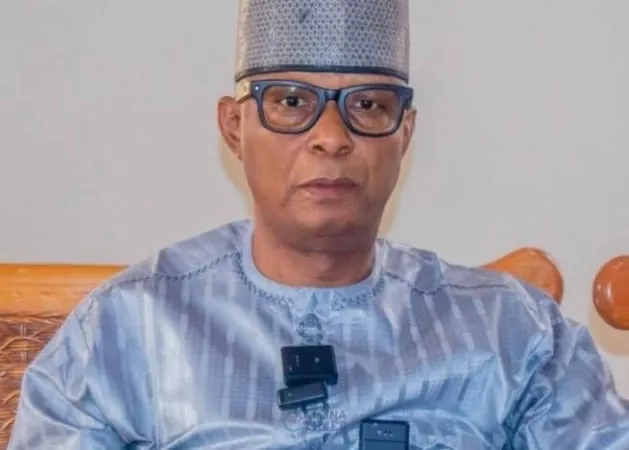
- Housing & Urban Development Minister Muttaqha Darma
The minister reportedly argued that when workers exhaust a large proportion of their legitimate income on rent, they may be compelled to look for additional sources of money to meet other family responsibilities, including education and welfare—and that such financial pressure could create incentives for corruption.
That observation deserves serious reflection.
As the minister put it, government would work to ensure that workers do not spend 40 to 60 per cent of their income on rent, while also pursuing the broader objective of ensuring that Nigerians who are without decent shelter can have “a place they call home.”
The latter phrase may well be the more important part of the policy conversation.
Because housing is not merely about buildings. It is about dignity.
The cruel mathematics of rent
Consider the reality confronting the average worker in Nigeria’s major cities.
Reports indicate that rents have increased dramatically across the country, with landlords pointing to rising construction costs, inflation, currency fluctuations, interest rates and the growing cost of maintaining properties.
But whatever the explanation, the tenant ultimately receives the bill.
In Abuja, for instance, rents in many central and relatively developed districts have climbed into the millions of naira annually. Even in satellite communities such as Kubwa, Lugbe and parts of Karu, what once constituted relatively affordable accommodation can now consume a substantial portion of a worker’s annual income.
Lagos presents a similar picture, with prime locations commanding extraordinary rents while developing areas and distant suburbs increasingly become the refuge of workers unable to afford accommodation closer to their places of employment.
This raises an uncomfortable question.
How does a worker earning around the minimum wage—or even a modestly higher salary—realistically afford a two-bedroom apartment costing ₦2 million a year, while still feeding a family, paying school fees, commuting to work, meeting medical bills and fulfilling other basic obligations?
The mathematics simply does not work.
And when legitimate income cannot meet legitimate obligations, society should not be surprised when some people begin searching for illegitimate alternatives.
This is not to justify corruption. Far from it.
Rather, it is to recognise that economic desperation can create an environment in which ethical choices become progressively harder to sustain.
A society that demands integrity from its workers must also be concerned about the economic conditions under which that integrity is expected to survive.
The houses we have but cannot use
Yet Nigeria’s housing crisis presents another paradox that should trouble policymakers.
While millions of Nigerians struggle to find affordable accommodation, major cities—particularly Abuja—are dotted with completed houses that have remained vacant for years.
Some have reportedly stood unoccupied for five, 10 years or even longer.
Here lies one of the strangest contradictions of our housing crisis: we have people without houses and houses without people.
At various times, proposals have emerged to deal with this contradiction. These have included reviewing land titles, imposing financial penalties on owners of abandoned or unused properties, and converting suitable idle properties into affordable housing.
Some of these proposals have sounded promising.
But, like many good ideas in Nigeria, they appear to have entered what might politely be called the country’s administrative “voice mail”.
The question is no longer whether Nigeria understands the problem. It is whether the country has the political will, institutional capacity and regulatory courage to do something about it.
The Housing Minister’s indication that his ministry is taking stock of abandoned housing projects across the country is therefore important.
There are reportedly numerous housing projects dating back several administrations—including projects initiated during the Obasanjo era—that remain abandoned in various parts of the country.
If these structures can be recovered, completed, rehabilitated and put into circulation, they could become part of the answer to the housing problem.
Government does not necessarily have to begin every solution with another groundbreaking ceremony.
Sometimes, the first step towards solving a problem is to finish what has already been started.
Can government really control rent?
This is where the matter becomes considerably more complicated.
The announcement of federal intervention has naturally generated questions about the constitutional and practical limits of government’s ability to regulate rents.
Housing and tenancy regulation is not simply a matter of announcing a national price ceiling. Much of the legal authority over tenancy matters resides at the state level, while the National Assembly legislates for the Federal Capital Territory.
Some states, including Lagos, have enacted tenancy laws addressing matters such as advance rent, agency fees and eviction procedures. But regulating the terms of tenancy is not necessarily the same thing as fixing the exact amount a landlord may charge.
And therein lies the challenge.
Government can legislate against exploitation. It can regulate professional conduct in the real estate sector. It can address illegal agency charges. It can discourage unreasonable demands for several years’ rent in advance. It can make housing development more attractive. It can provide infrastructure to open up new areas for development.
But if government simply announces an arbitrary rent ceiling without addressing the underlying economics of housing supply, construction costs, land prices, infrastructure and financing, the policy may prove difficult to enforce—and may produce unintended consequences.
The better question, therefore, may not be “How does government force every landlord to charge less?”
It may be:
“How does government create an environment in which affordable housing becomes sufficiently available that excessive rents can no longer thrive?”
That is a different question—and perhaps a more sustainable one.
Vacant houses and the morality of scarcity
One area that deserves particularly urgent attention is the taxation and regulation of completed properties that remain deliberately vacant for extended periods.
The idea of imposing substantially higher charges on owners who leave developed properties idle has been raised at different times. So too has the possibility of reviewing land allocations where properties are not developed or utilised in accordance with the conditions attached to them.
Such measures would, of course, have to be carefully designed to distinguish deliberate speculation from legitimate reasons for vacancy. But the principle deserves serious consideration.
If thousands of habitable houses remain locked away as investment assets while thousands of workers search desperately for affordable accommodation, there is a policy contradiction that government should not ignore.
Housing cannot be treated exclusively as a financial commodity when the absence of housing has consequences for the entire society.
Perhaps Nigeria needs to begin looking at the housing question not merely from the perspective of property ownership, but from the perspective of social utility.
What good is a magnificent house standing empty for years while a family of workers is pushed farther and farther away from the city because it cannot afford rent?
And what happens to the quality of life of the worker who spends two or three hours commuting each way simply because decent accommodation near his workplace is beyond his reach?
The consequences extend beyond housing.
Long commutes affect productivity. High transport costs reduce disposable income. Poor accommodation affects family welfare. Housing insecurity affects children’s education. And financial pressure can deepen the very social problems government is attempting to solve.
The worker and the social contract
This is why the Federal Government’s renewed interest in affordable housing should not be viewed merely as another policy announcement.
It should be seen as part of a much larger conversation about the social contract between the Nigerian state and its citizens.
A worker gives society his time, energy, skills and productive capacity. In return, he expects more than a monthly salary deposited into his account. He expects an environment in which that salary can purchase the basic necessities of a decent life.
What is the meaning of a wage if, after receiving it, the worker immediately loses a disproportionate part of it to rent?
What is the meaning of employment if the cost of getting to work, feeding the family and keeping a roof over their heads leaves the worker permanently indebted?
And what does “affordable housing” really mean if it exists only in government documents while the average worker continues to negotiate annually with landlords for the privilege of remaining housed?
These are questions that go beyond economics.
They go to the heart of dignity, citizenship and governance.
The Federal Government may therefore be right to seek ways of reducing the burden of rent on workers. But the test will not be in the announcement. The test will be in implementation.
The country needs more than another housing policy. It needs a coordinated framework that combines affordable financing, mass housing development, lower construction costs, improved infrastructure, effective tenancy regulation, incentives for affordable rental housing, recovery of abandoned government housing projects and appropriate measures against long-term speculative vacancy.
Most importantly, such a policy must be realistic enough to survive beyond the tenure of the minister who announces it.
Nigeria has seen too many good ideas die quietly between policy announcement and implementation.
The present housing crisis demands something different.
Because at the end of the day, a house is not merely four walls, a roof and a landlord’s receipt. It is the place from which a citizen begins his daily engagement with society.
When that place becomes unaffordable, the crisis is no longer simply about rent.
It is about the dignity of work itself.
And perhaps that is the fundamental question the Federal Government must answer: What does it mean to ask a citizen to work honestly, when honest work can no longer guarantee him the simple dignity of a home?