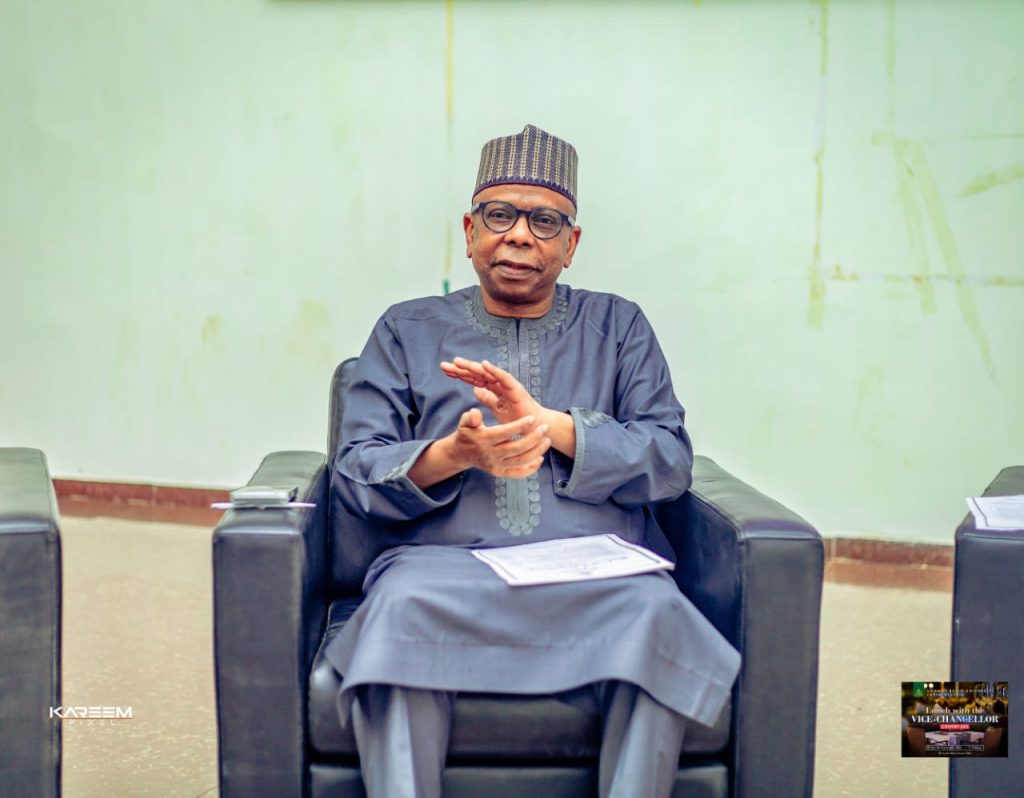
Alhaji Lawal Garba
Renowned business executive and entrepreneur, Lawal Garba, has returned to his alma mater, Ahmadu Bello University (ABU), Zaria, with a message that success is rarely the product of privilege or good fortune, but is often forged through integrity, excellence, perseverance and an unwavering commitment to personal growth.
Garba, Chairman/CEO of Trobell International Nigeria Ltd, delivered the message at the weekend while speaking at the second edition of ABU’s “Lunch with the Vice-Chancellor” programme, held at the Yusufu Bala Usman Hall, Main Campus, Samaru.
The programme, introduced last year, provides a relaxed platform for students to interact with the Vice-Chancellor and accomplished personalities whose experiences, insights and professional journeys can inspire and better prepare them for life beyond the university.
Returning to the institution where his own journey began, Garba used the occasion to share the experiences, setbacks and principles that shaped his transition from a Quantity Surveying graduate into a successful entrepreneur and business leader.
Delivering the keynote lecture, titled “The Lawal Garba Way: Building Enterprises, Creating Opportunities, Transforming Lives,” he told the students that his journey had not been built on privilege, but on persistence, discipline, hard work, faith and the willingness to make difficult choices.
Garba, FNIQS, MFR, who has distinguished himself professionally as a Quantity Surveyor, made history as the first graduate of the discipline to establish a property cost-control function in Nigeria’s banking sector.
But behind the professional accomplishments, he said, was a journey punctuated by missed opportunities, setbacks and difficult decisions—including moments when he had to turn away from short-term gains because they conflicted with his long-term values.
He recalled that Trobell Nigeria Ltd started modestly, gradually building its reputation on competence, reliability and trust.
“In one early project, we were selected not because we were the biggest firm, but the client believed in our commitment to deliver,” he said.
That experience, he explained, reinforced one of the most important lessons of his career: credibility can be more valuable than size, and trust can open doors that money and influence cannot.
Garba distilled his experience into five principles which, he said, should guide students as they prepare to navigate the world beyond the university: integrity, excellence, continuous learning, relationships and resilience.
Integrity before opportunity
“Integrity is everything,” Garba declared, stressing that a reputation painstakingly built over many years could be destroyed by a single dishonest decision.
He recalled witnessing multimillion-naira contracts awarded largely on the strength of trust established over many years, rather than merely on the size or visibility of a company.
For him, integrity is therefore not simply a moral virtue but also a valuable professional asset.
Excellence in the little things
Garba also urged the students to pursue excellence even in tasks that appear insignificant, warning that the quality of a person’s work eventually becomes a reflection of his or her character.
He encouraged them to remain curious and constantly upgrade their knowledge, particularly in an era in which technology is rapidly reshaping virtually every profession.
“The day you stop learning is the day you start becoming irrelevant,” he said.
He recalled how some professionals who failed to embrace digital tools and modern project-management systems gradually lost their relevance as their industries evolved.
Build relationships
Garba equally emphasised the power of relationships and networking, noting that some of the most significant opportunities of his career came through personal relationships rather than formal applications.
He advised the students to treat people with respect, regardless of their social or professional status.
“Treat everyone with dignity. Maintain relationships. One conversation can change your life forever,” he said.
According to him, today’s classmate, colleague or casual acquaintance could tomorrow become a business partner, employer, mentor or the person who opens an unexpected door.
Learn to withstand setbacks
On resilience, Garba urged the students not to interpret failure as the end of the road.
Rather, he described failure and setbacks as inevitable parts of the journey to success, insisting that what ultimately matters is the ability to learn from difficult experiences and keep moving forward.
He encouraged the students to develop the capacity to withstand disappointment, adapt to changing circumstances and remain focused on their long-term goals even when immediate results are discouraging.
Look beyond the classroom
Garba also challenged the students to look beyond their academic disciplines and acquire skills that are relevant to the marketplace.
He pointed to the vast opportunities available in Nigeria across agriculture, technology, mining, energy, manufacturing, infrastructure, the digital economy and the creative industries.
According to him, Nigeria remains one of the world’s most promising countries for people prepared to identify problems, develop solutions and create value.
He recalled that, while his formal education was in Quantity Surveying, he deliberately complemented his professional training with knowledge of business and management—an approach he urged the students to emulate.
“Your degree is important, but it should not be the boundary of your learning,” was the thrust of his message.
Garba further challenged the students to see leadership not as a privilege or avenue for personal enrichment, but as an opportunity to serve others.
He said the greatest satisfaction derived from success should come from the ability to create opportunities for others, improve communities and leave behind institutions and people that are better because of one’s contribution.
For Garba, therefore, success is ultimately bigger than personal wealth or professional recognition. It is about building enterprises, creating opportunities and transforming lives—the central philosophy underpinning the keynote lecture.
Expressing gratitude to ABU for inviting him back to share his experiences with the next generation, Garba urged the university to remain committed to producing leaders, innovators and nation-builders capable of making meaningful contributions to Nigeria and Africa.
His return to the university, decades after leaving its classrooms, offered the students more than a lecture. It was a reminder that professional success is rarely an overnight achievement, but the cumulative reward of values, discipline, learning, relationships and the resilience to keep going when the journey becomes difficult.