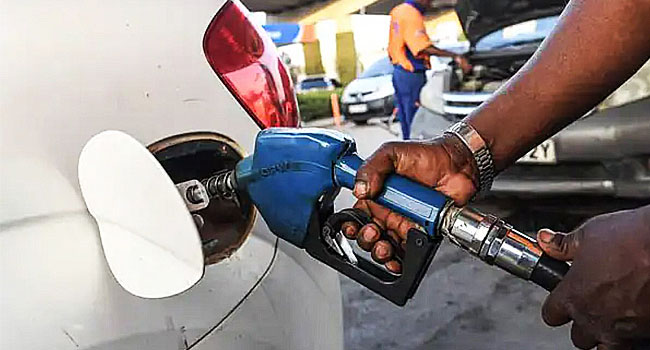
The Federal Competition and Consumer Protection Commission (FCCPC) and the Nigerian Midstream and Downstream Petroleum Regulatory Authority (NMDPRA) have strengthened their regulatory cooperation to tackle price fixing, cartel behaviour, product withholding, under-dispensing and other practices capable of distorting competition in the petroleum sector.
The two agencies formalised the partnership through a Memorandum of Understanding (MoU) signed in Abuja on Thursday September 10 which aimed at improving market surveillance, information sharing, investigations and enforcement in Nigeria’s deregulated petroleum market.
Speaking at the signing ceremony, the Executive Vice Chairman of the FCCPC, Tunji Bello, said the agreement would help ensure that activities in the petroleum market were driven by fair competition and consumer choice rather than collusion and exploitation.
Bello described the petroleum industry as one of the most important sectors of the Nigerian economy, noting that developments in the sector have direct implications for transportation, food prices, manufacturing and the livelihoods of millions of Nigerians.
He said effective competition and transparency in the sector were essential to protecting consumers, attracting investment and strengthening the wider economy.
According to him, the FCCPC does not regulate or approve petroleum prices in the deregulated downstream market, but has the responsibility to intervene when market conduct undermines competition or harms consumers.
He said the Commission would investigate and take appropriate action against cartel behaviour, price fixing, abuse of dominance, restrictive agreements, market allocation, misleading pricing, under-dispensing, adulteration and other anti-competitive practices.
Bello said the agreement would improve the ability of both agencies to detect and respond to market abuses through enhanced intelligence sharing and coordinated enforcement.
“FCCPC and NMDPRA will deepen information sharing, enhance market intelligence, coordinate enforcement activities, and establish clear mechanisms for collaboration on matters that intersect our respective mandates,” he said.
He urged consumers to report suspected violations through the appropriate channels of the two agencies, stressing that consumer welfare remained central to the FCCPC’s mandate.
Bello also said legitimate petroleum businesses would benefit from a more transparent and competitive market, as operators that complied with regulations would have greater certainty in their operations.
On his part, the Chief Executive of NMDPRA, Rabiu Abdullahi Umar, said the partnership would strengthen oversight across the petroleum value chain, covering refining, processing, transportation, bulk storage, wholesale distribution and retail operations.
Umar said the Petroleum Industry Act (PIA) 2021 and the Federal Competition and Consumer Protection Act (FCCPA) 2018 provide the legal basis for cooperation between the two agencies.
He noted that both institutions had been engaging on areas of mutual interest since 2022, adding that the new agreement would provide a more structured framework for their collaboration.
“Today, we translate that statutory mandate into an actionable operational framework,” Umar said.
He said the agencies would maintain zero tolerance for exploitative practices, collusive pricing, product withholding and anti-competitive market allocation, while strengthening measures to ensure accurate product metering and fuel quality.
Umar said the agreement also provides clearer procedures for market surveillance, incident reporting, joint investigations and the resolution of consumer complaints.
He added that synchronising information-sharing mechanisms and establishing clear benchmarks for investigations and enforcement would provide regulatory certainty for industry operators while reducing jurisdictional overlaps.
The partnership comes amid continued adjustments in Nigeria’s downstream petroleum market following deregulation, which has increased the importance of competition, transparency and consumer protection in the pricing and distribution of petroleum products.
The agencies said the collaboration would help strengthen market integrity, protect consumers from exploitative practices and promote fair competition, with the broader objective of improving efficiency and confidence in the petroleum sector.