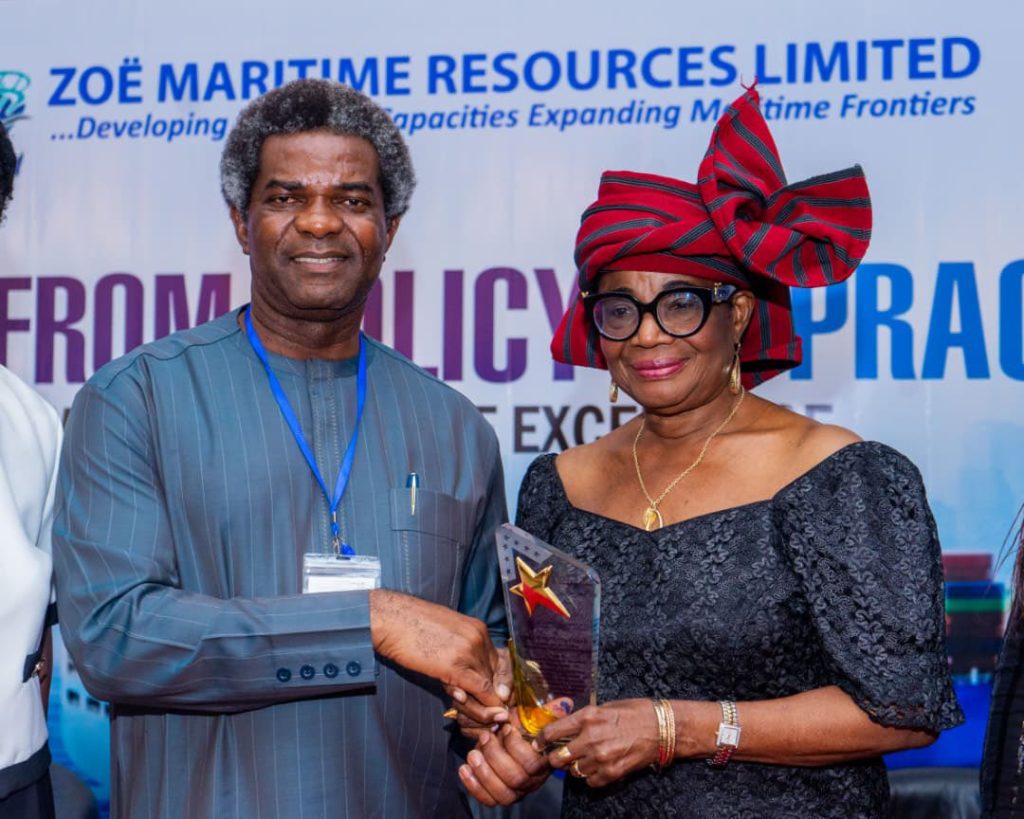
Nigerian Upstream Petroleum Regulatory Commission (NUPRC) has called for deliberate efforts to ensure Nigeria derives greater maritime, industrial and developmental value from its growing offshore oil and gas activities.
The Commission’s Chief Executive, Mrs. Oritsemeyiwa Eyesan, made the call on Tuesday while delivering a lecture at the Lagos International Maritime Week 2026 and the 11th International Maritime Business-to-Business Conference and Exhibition, themed, “From Policy to Practice: Powering Maritime Excellence in Africa.”
Eyesan, who was represented by the Executive Commissioner, Health, Safety, Environment and Community, Captain John Tonlagha, said offshore development must go beyond hydrocarbon production, stressing that it presents an opportunity to build a globally competitive ecosystem of maritime services, infrastructure, technology and skills.
She said, “The pathway before us is clear. Policy to practice must mean moving from petroleum acreage to investment; from investment to offshore projects; from projects to production; from production to maritime enterprise; and from maritime enterprise to Nigerian jobs, technology, industrial capability and sustainable economic prosperity.”
According to the CCE, investments alone do not automatically translate into national value. She argued that investments must be connected to domestic capability, competitive suppliers, skills development, infrastructure and measurable performance.
The NUPRC boss urged greater investment in ports, ship-repair facilities, fabrication yards, logistics bases, storage systems, waste-management facilities and coastal transport infrastructure.
She also called for stronger participation of Nigerian companies across the offshore value chain, including vessel ownership and operation, marine logistics, subsea engineering, fabrication, equipment maintenance, inspection, certification, environmental services and marine surveying.
On environmental protection, Eyesan stressed that offshore development must be undertaken responsibly.
“The blue economy cannot be sustainable if the marine environment is treated as an afterthought,” she said
She noted that the Petroleum Industry Act 2021 provides an enabling framework for offshore development, including provisions for responsible decommissioning and abandonment of petroleum facilities.
Eyesan said Nigeria’s success should ultimately be measured by increased offshore investment, stronger production and energy security, greater Nigerian maritime value, improved marine environmental protection, and the emergence of Nigeria as a competitive offshore energy and maritime-services hub for Africa.