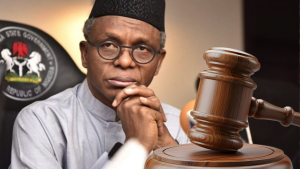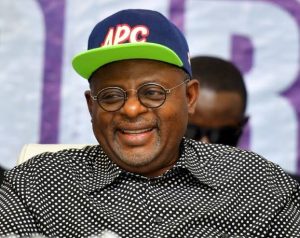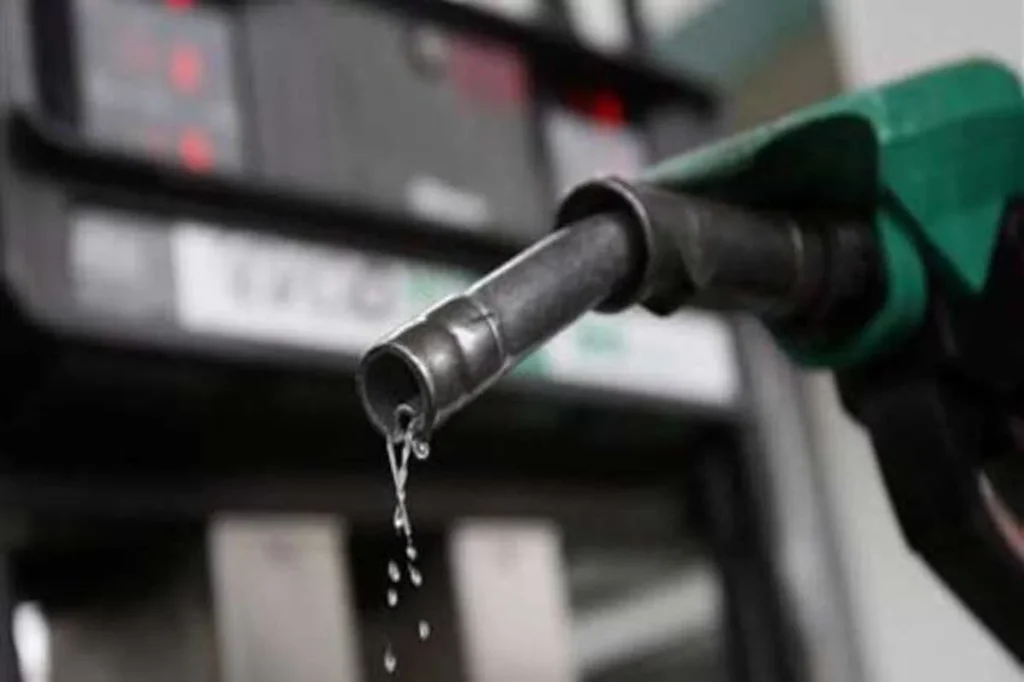
Media aide to former Vice President Atiku Abubakar, Paul Ibe, has defended his principal’s production-anchored fuel subsidy proposal, urging former Ekiti State Governor Kayode Fayemi to address the economic substance of the policy rather than dismiss it as electioneering politics.
In a statement shared on Tuesday, Ibe faulted Fayemi’s comparison of Atiku’s proposal with the All Progressives Congress (APC)’s Muslim-Muslim presidential ticket in the 2023 election, describing the analogy as misplaced.
According to him, the focus should be on whether the proposed subsidy model is economically viable and capable of addressing Nigeria’s energy challenges.
“Former Governor Kayode Fayemi’s attempt to dismiss Atiku Abubakar’s production-anchored fuel subsidy proposal as merely a political strategy, and to equate it with the APC’s Muslim-Muslim ticket in 2023, is a rather curious way of avoiding the substance of the debate. Truth be told, the comparison is ridiculous,” Ibe said.
He argued that Atiku was not advocating a return to the previous fuel subsidy regime, which he said was characterised by opacity and widespread abuse.
“Atiku is not proposing a return to the discredited subsidy regime of the past, in which government expenditure was shrouded in opacity, importers made questionable claims, and subsidy payments became a fertile ground for corruption.”
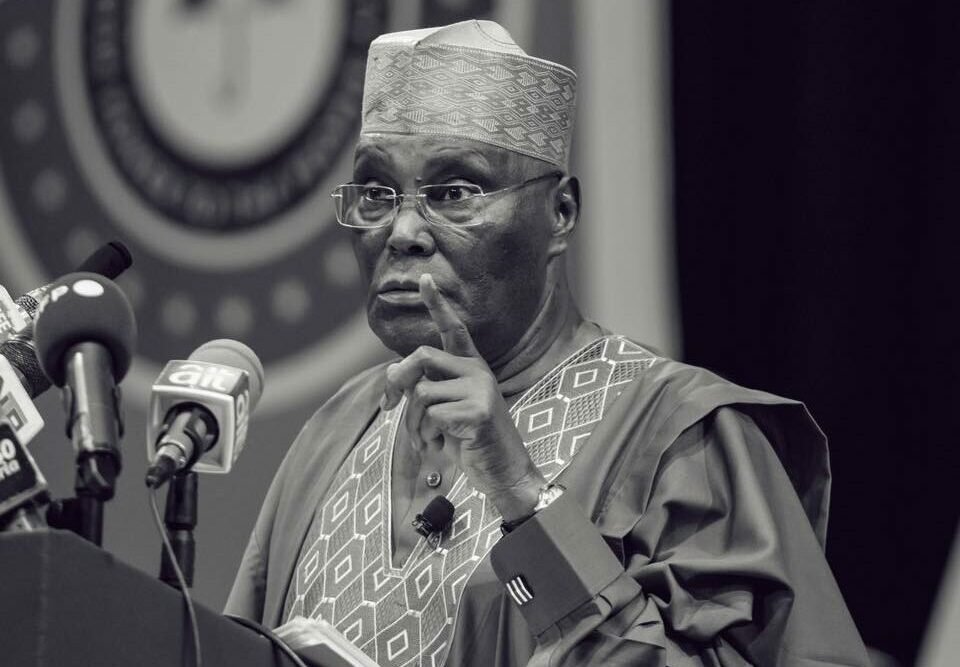
Instead, Ibe said the former vice president was proposing “a production-anchored subsidy — a fundamentally different model designed around domestic production and refining.”
He added that the objective was to reduce the cost of locally refined petroleum products through a targeted and transparent mechanism while boosting domestic refining, creating jobs and lowering transportation costs.
“Instead of subsidising an inefficient system dependent on imported petroleum products, the objective is to use a targeted and transparent mechanism to reduce the cost of locally produced fuel, encourage domestic refining, support productive capacity, create jobs, substantially reduce the cost of transportation and logistics and ultimately bring relief to Nigerian consumers.”
The Atiku aide maintained that the proposal should be assessed based on its economic implications rather than political considerations.
“That is not a slogan. It is an economic policy proposition.”
He challenged Fayemi to provide evidence if he believed the proposal was flawed.
“Indeed, if Fayemi believes the proposal is economically unsound, there is a perfectly legitimate way to challenge it: demonstrate the projected fiscal cost, explain why the production-linked mechanism would fail, identify the inflationary or market distortions it would create, and propose a better alternative.”
“But simply saying that it is a political strategy does not answer any of those questions.”
Ibe further argued that subsidy removal alone should not be regarded as a complete economic policy, insisting that structural issues affecting Nigeria’s energy sector must also be addressed.
“The more important point is that Nigeria cannot continue to pretend that removing subsidy, by itself, is an economic policy.”
“Subsidy removal without addressing the underlying cost structure of petroleum products, domestic refining capacity, energy costs, transportation and the wider productive economy simply transfers the burden from government to citizens.”
He added that Atiku’s proposal sought to replace an import-dependent subsidy regime with one driven by local production.
“It seeks to move Nigeria from a subsidy regime anchored on imports to one anchored on production.”
“From opacity to transparency. From rent-seeking to productive capacity. From dependence on imported refined products to strengthening domestic refining. And from an uncontrolled fiscal burden to a targeted, measurable intervention.”
Calling for a more substantive public conversation, Ibe said Nigerians deserved an evidence-based debate on the proposal.
“If it is bad economics, show Nigerians the numbers. If it is fiscally unsustainable, demonstrate why. If there is a better way to reduce the cost of petrol and diesel while protecting consumers and encouraging domestic production, put it on the table.”
He concluded by insisting that the former vice president had presented a policy proposal that should be examined on its merits rather than dismissed for political reasons.
“Atiku has put a proposal on the table. The appropriate response is not to ridicule it as a political strategy. The appropriate response is to interrogate the economics.”