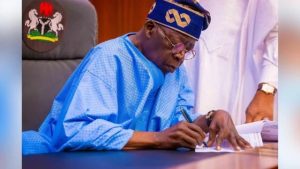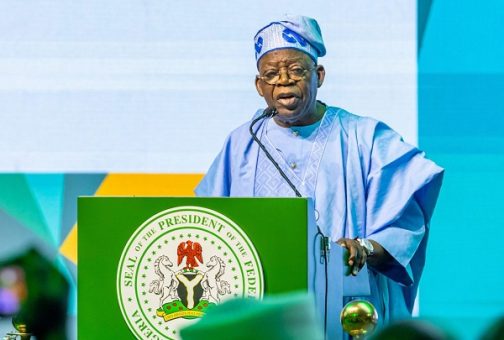
President Bola Tinubu
Presidential spokesman Bayo Onanuga has said the impressive 2025 financial performance of the Nigerian National Petroleum Company Limited (NNPC Ltd.) shows why Nigeria should not return to the fuel subsidy regime.
Onanuga, in a post on his X handle on Tuesday, said NNPC Ltd. recorded significant growth across key financial and operational indicators after operating without fuel subsidy in 2025.
According to him, the company’s Earnings Before Interest, Taxes, Depreciation and Amortisation (EBITDA) rose by 22 per cent to ₦18 trillion, while earnings per share increased by 32 per cent to ₦35.9.
He added that operating cash flow grew by 16 per cent to ₦12.8 trillion, return on equity improved by 200 basis points to 16 per cent, and the company’s declared dividend increased by 35 per cent to ₦5.8 trillion.
On the operational side, Onanuga said crude oil and condensate production averaged 1.77 million barrels per day, the highest level recorded in five years, while natural gas output averaged 7.2 billion standard cubic feet per day, the highest in three years.
He further noted that total crude oil and condensate production reached 565.8 million barrels, up five per cent, with NNPC Ltd.’s equity share rising 11 per cent to 223.7 million barrels.
He also said natural gas production increased by nine per cent to 2,606.2 billion standard cubic feet, while the company’s equity share rose 11 per cent to 1,154.9 billion standard cubic feet.
Using the figures to defend the Federal Government’s reforms, Onanuga argued that returning to fuel subsidy would undermine the progress made by the national oil company.
> “Atiku’s subsidy programme will certainly kill this company, which could be our own Aramco. Our country has no business taking 100 steps back. Forward ever!”
The comments come amid renewed debate over fuel subsidy ahead of the 2027 general election. While supporters of subsidy removal say it has improved NNPC Ltd.’s commercial performance, critics argue that the policy has contributed to rising living costs for many Nigerians.