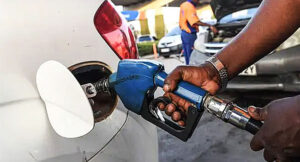
The price of Premium Motor Spirit (PMS), commonly known as petrol, has risen further in Abuja following an upward adjustment in the wholesale price of the product by Dangote Petroleum Refinery.
The refinery increased its gantry price from N1,265 to N1,350 per litre, representing an N85 or 6.7 per cent increase.
Following the adjustment, some filling stations in the Federal Capital Territory have raised their pump prices to as much as N1,430 per litre.
A market survey conducted by the News Agency of Nigeria (NAN) in Abuja on Sunday September 13 showed that several filling stations had already adjusted their prices.
MRS stations were reportedly selling petrol at N1,395 per litre, compared with N1,350 previously, while NIPCO outlets had raised their price to N1,430 per litre.
Mobil stations were also reported to have increased their pump price to N1,400 per litre.
An attendant at an MRS outlet said consumers could face another price adjustment when the station receives a fresh supply because the product currently being sold was purchased before the latest increase in the refinery’s wholesale price.
The latest development comes amid rising international crude oil prices, with Brent crude, Nigeria’s benchmark, reportedly trading above $108 per barrel.
The increase has also heightened concerns over the possible impact of rising fuel costs on household expenditure and the broader cost of living.
Economist and development expert, Dr Aliyu Ilias, warned that further increases in petrol prices could fuel inflation as businesses and transport operators seek to pass higher operating costs on to consumers.
Ilias said transportation was closely linked to virtually every area of economic activity, particularly the production and movement of food from farms and manufacturers to markets. He noted that higher transport costs could therefore trigger increases in the prices of food and other essential commodities.
Former Secretary-General of the Organisation of African Trade Union Unity, Owei Lakemfa, urged the Federal Government to strengthen economic planning and regulatory measures to manage the impact of fluctuations in international oil prices.
Lakemfa said efforts to increase domestic refining capacity should go hand in hand with higher crude oil production, arguing that stronger local refining could reduce some of the costs associated with importing refined petroleum products.
He also called for tighter oversight of the downstream petroleum sector to check excessive market influence and unjustified price increases.
Meanwhile, the National Publicity Secretary of the Independent Petroleum Marketers Association of Nigeria (IPMAN), Chinedu Ukadike, confirmed that petroleum retailers had been adjusting pump prices following repeated changes in the pricing structure of Dangote Refinery.
Ukadike said the frequent price adjustments had created uncertainty for marketers because they were unable to accurately determine the replacement cost of their existing stock.
The latest increase has renewed concerns that continued increases in petrol prices could further raise transportation costs and put additional pressure on household budgets if the upward trend persists.